Do you generate more electricity with solar panels than you are currently using? Then much of that energy goes back into the electricity grid. With a home battery, you store this power for later use. This way, you use your own solar power when you need it and become less dependent on energy suppliers and fluctuating tariffs.
This is becoming increasingly relevant. From 1 January 2027, the net-metering scheme will end completely. Delivered solar power will then no longer be offset against your own consumption, but paid out at a lower rate. This makes it increasingly attractive to use or store self-generated energy directly.
Utrecht is a densely built city with a wide variety of housing: from flats and townhouses to terraced houses and new developments in neighbourhoods like Leidsche Rijn. In many neighbourhoods, the electricity grid is already heavily loaded, while more and more roofs are filled with solar panels. Shift to Solar helps homeowners in Utrecht choose and install a home battery that suits their home, energy consumption and future plans. Not a standard solution, but a system that logically fits your situation.
Personal contact within 24 hours
Request a no-obligation quote for your home battery
Let Shift to Solar calculate what a home battery can do for your home. Within five working days, you will receive a tailor-made proposal tailored to your energy consumption. Quotes are valid for 14 days after receipt. Fast, clear and completely non-binding.
Calculate the right capacity for your home battery immediately
The capacity of a home battery determines how much electricity you can store for later self-use. A well-chosen capacity will ensure that the battery matches your daily energy needs, without you investing in storage that you barely use or actually fall short during peak times.
What suits your situation depends on several factors. Consider the number of solar panels on your roof, your annual energy consumption and how you use electricity during the day. In Utrecht, for example, we often see that consumption is mainly in the evening, while generation is high during the day. That makes the right battery size extra important.
Our calculation tool gives you a quick first indication of which battery capacity might make sense for your home. This result is a guideline, not definitive advice.
If you request a no-obligation quote from Shift to Solar, we look beyond the calculation tool. We analyse your consumption, generation, peak moments and any future plans, such as electric driving or expansion of solar panels. Based on this, we recommend a home battery that is technically sound and remains pleasant to use on a daily basis.
Calculate the ideal capacity of your home battery
Want to know which battery best suits your solar panels? Use this calculation tool to easily calculate the ideal storage capacity of your home battery.
Enter the number of solar panels you have and check that the standard power of 400 Wp per panel matches your installation. On this basis, you will immediately see how much energy you can store and which capacity is most suitable for your home.
Why a home battery in Utrecht is becoming increasingly interesting
The way we use electricity is changing rapidly. Solar panels provide a lot of local generation, while the electricity grid in urban areas like Utrecht is not always up to the task. At the same time, the rules around feed-in are changing. This makes it increasingly important to be smarter about using your own generated energy.
Solar panels and grid load
On sunny days, solar panels often generate more power than you are currently using in your home. This excess energy is fed back into the electricity grid. In Utrecht, that grid is already under pressure in many places, especially during peak times when many households feed energy back at the same time.
Grid operators have to ensure a stable and safe electricity grid and cannot take in unlimited power. As a result, feed-in becomes less obvious and fees decrease. The financial benefit of feed-in therefore becomes less predictable.
With a home battery, you use this power yourself. You store the energy during the day and use it later, e.g. in the evening or early morning. This way, you increase your own consumption of solar power and reduce your dependence on the grid, without having to change your lifestyle.
Abolition of the net-metering scheme
Besides the increasing pressure on the electricity grid, the regulations are also changing. From 1 January 2027, the net-metering scheme will end completely. Returned solar power can then no longer be settled at the full electricity tariff, but will be paid out at a lower rate.
This dramatically changes the efficiency of solar panels. Not feed-in, but smart own consumption becomes the key. A home battery makes this possible by storing excess solar power and using it later, when it will benefit you most.
Still unsure about which home battery suits your home?
Feel free to contact our team for personal advice. We will be happy to help you with all your questions on capacity, installation or savings.
What is a home battery and how does it work in practice?
A home battery is a system that allows you to store electricity for later use. The battery captures the power your solar panels generate, but which you do not need right away at that moment. Instead of delivering this energy back to the grid, you store it in your own home.
The goal is clear: use as much of your own generated power as possible, even when the sun is not shining.
This is how it works in practice
During the day, solar panels often produce more power than you consume directly. Appliances are off, occupants are not at home and consumption is low. Without a home battery, this excess energy is automatically fed back into the grid. With a home battery, the power is stored first.
When you need electricity later in the day, for example in the evening or at night, you use this stored energy. Only when the battery runs out will the system automatically switch to power from the grid.
In practice, the proportion of own power consumption can increase from an average of about 30% to 60% or more, depending on your situation.
Home battery combined with solar panels
A home battery works together with your solar panels and the inverter. The inverter converts the generated solar energy into usable power for your home. Smart control ensures that charging and discharging happens automatically. You don't have to do anything for this yourself.
Through an app or monitoring system, you have insight into your energy production, storage and consumption. So you can see exactly when you use your own power and when you tap into the grid.
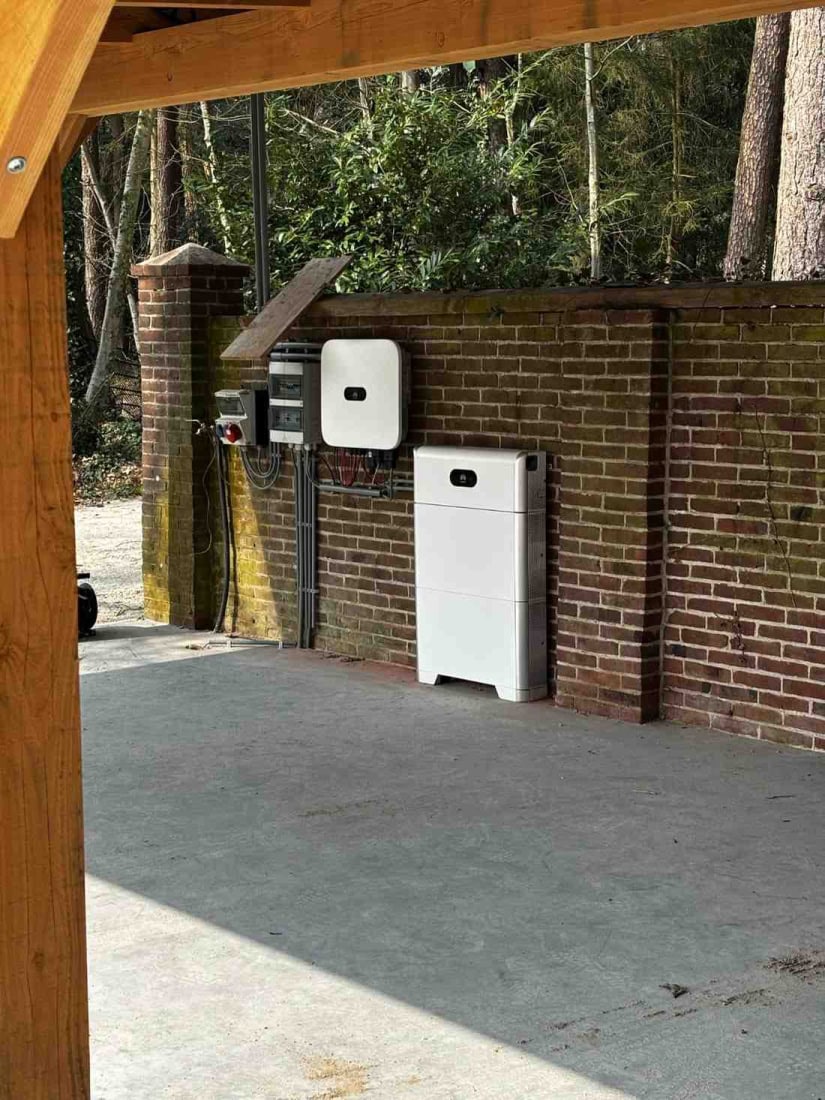
Home batteries in focus
This is what a Shift to Solar home battery looks like in practice. Click through recent installations at customers' homes.
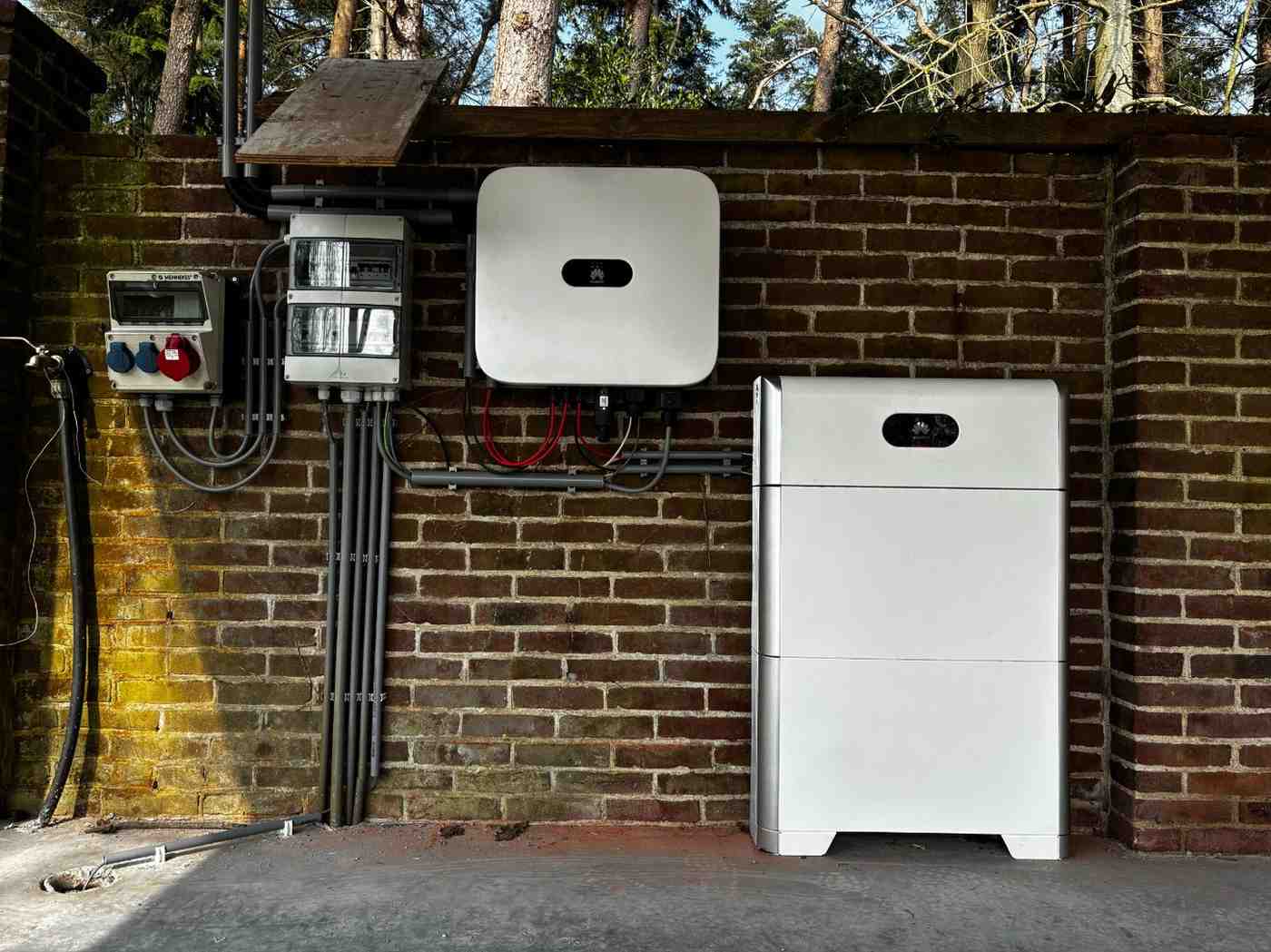
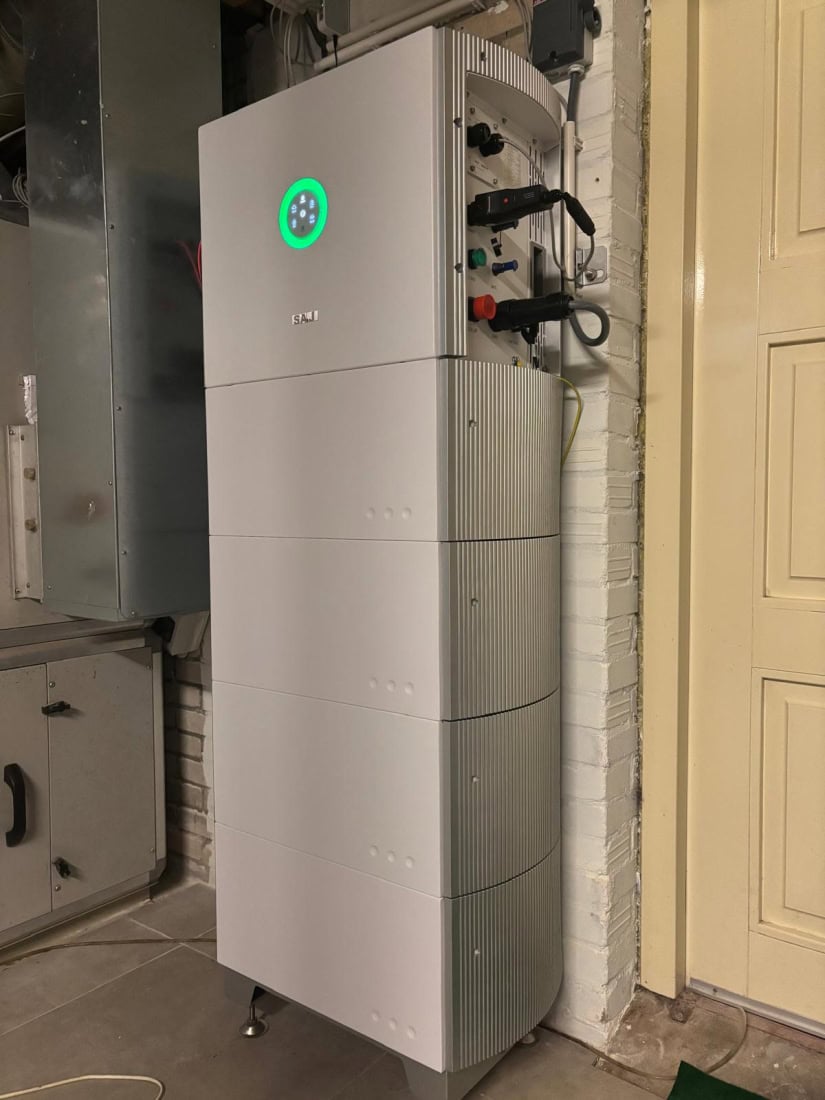
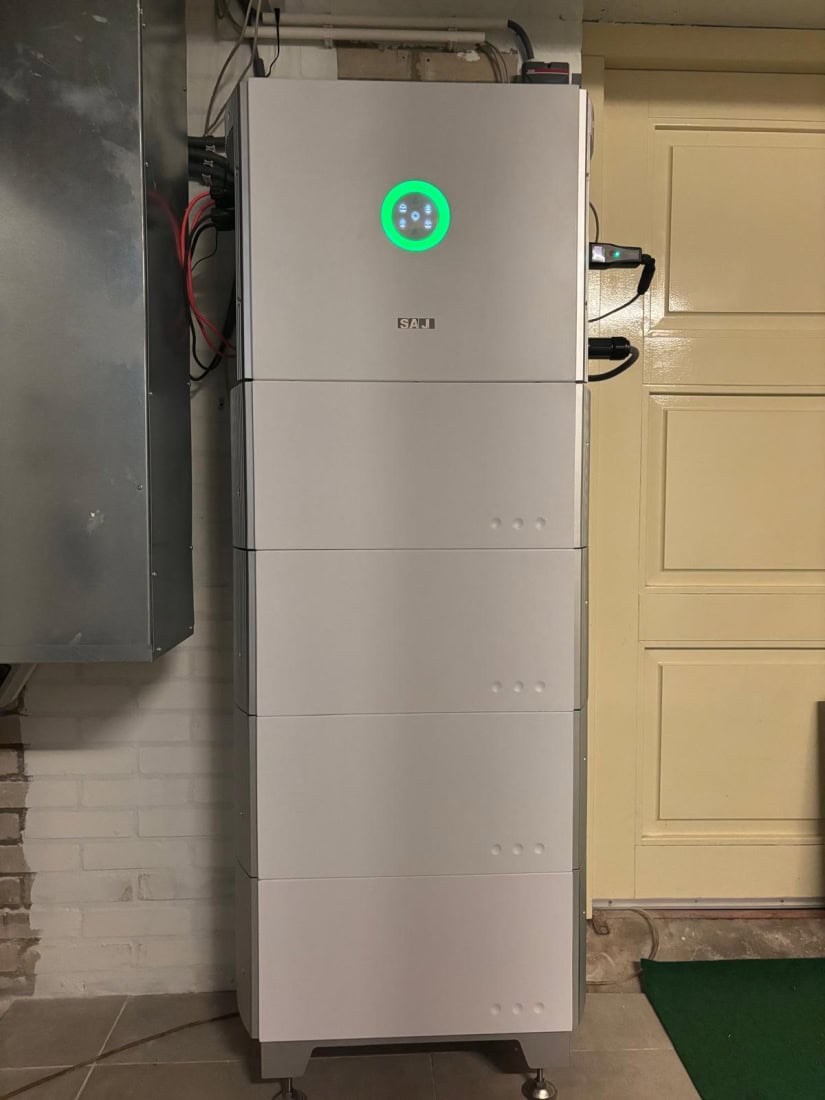
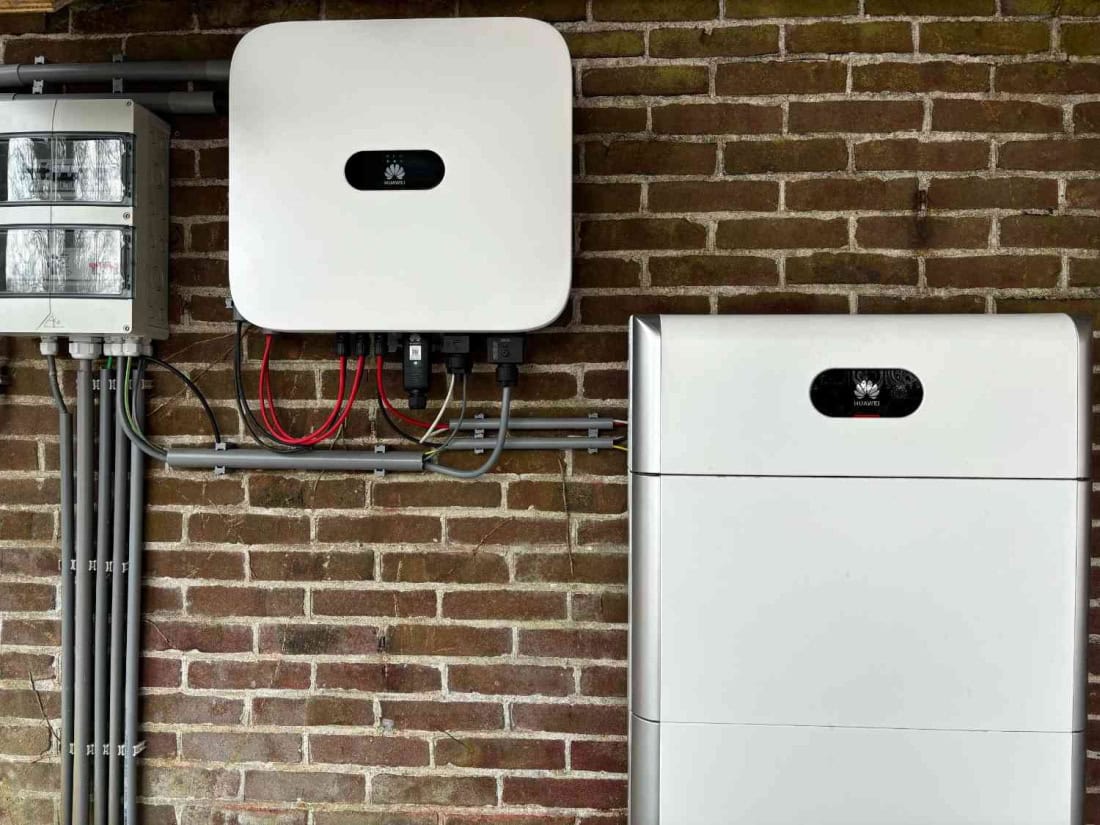
Which home battery suits your home?
Choosing the right home battery goes beyond just the number of kilowatt hours. Of course, capacity plays a role, but how and when you use power is also decisive. Think about peak times in the evening, charging an electric car or plans for a heat pump.
The examples below give a first impression based on situations we often encounter in practice. They help with orientation. The exact capacity always depends on your home, consumption and plans.
Small household
- Solar panels: 6-8 panels
- Annual consumption: ± 3,000 kWh
- Indicative battery: 3-5 kWh
Average family
- Solar panels: 8-12 panels
- Annual consumption: ± 4,500 kWh
- Indicative battery: 5-10 kWh
Large household
- Solar panels: 12-16 panels
- Annual consumption: ± 6,500 kWh
- Indicative battery: 10-15 kWh
With electric car or heat pump
- Solar panels: 14+ panels
- Annual consumption: 7,000+ kWh
- Indicative battery: 10-20 kWh
Want to know what this means for your home in Utrecht? Then use the calculation tool for a first estimate. For exact advice, a personal analysis is always recommended.
Common mistakes when choosing a home battery
When choosing a home battery, we regularly see a number of mistakes in practice. By taking these into account beforehand, you avoid the battery not being a good fit for your situation later on.
- Choosing a battery that is structurally too large or too small, resulting in inefficient use of storage capacity
- Looking only at the purchase price, without considering use, efficiency and lifespan
- No allowance for future additions, such as a charging station, heat pump or additional solar panels
By looking closely at your energy profile and plans beforehand, the home battery remains a logical choice even in the long run.
Having a home battery installed in Utrecht: this is how we work
A home battery must function safely and reliably. That requires a careful approach, from initial advice to installation. We go through everything with you step by step, so you know exactly where you stand.
Installation by certified specialists
Our technicians have extensive experience with renewable energy systems. They ensure a safe connection to the meter box, set up the system correctly and provide clear explanations on how the home battery works.
From advice to installation: all under one roof
- Analysis of your energy consumption and solar panels
- Technical design tailored to your home
- Installation and commissioning of the home battery
- Explanation, monitoring and aftercare
This ensures that all components work well together and that the system continues to function reliably in the long term.
Why choose Shift to Solar
We help companies and governments take truly sustainable steps. Always with energy, vigour and reliability.
Energetic and committed
Our energy drives sustainable innovation. We enthusiastically work on solutions that make a real impact for our customers, partners and the environment.
Reliable and transparent
We do what we promise. From quotation to delivery, you can count on clear communication and lasting results that last for years.
Moving forward together in a sustainable way
We believe in cooperation. With customers, partners and colleagues, we build a cleaner, circular future step by step.
Want to know more about who we are and what drives us?
Read more about usWhat does a home battery cost?
The cost of a home battery varies from one situation to another. Every home, installation and way of using energy is different. Factors such as the desired capacity, the technical situation in the house and any future plans play an important role.
That is why we do not work with fixed prices. At Shift to Solar, you always receive a customised, no-obligation quote. This gives you a clear and complete overview of the investment in advance, with no surprises afterwards.
What is always included in our price?
- Professional installation by certified fitters
- System adjustment and testing
- Explanation of use and operation
- Warranty on battery and installation
- Service and support after delivery
That way, you are not just investing in a home battery, but in a solution that is technically sound and continues to work reliably.
Subsidies and schemes for home batteries
Subsidies and schemes sometimes come into play when buying a home battery. At the same time, it is important to be realistic about this. The possibilities vary from situation to situation and change regularly.
National schemes and VAT benefits
National schemes for home batteries are limited. In some cases, VAT refunds are possible, for example when combined with solar panels and under specific conditions. This varies per home and installation.
We always clearly explain what does and does not apply in your situation.
Provincial and local opportunities
In addition to national schemes, there may be provincial or local initiatives. These are often temporary and not available for every property.
Together, we look at what applies in Utrecht and give a realistic picture of the possibilities.
Customer experiences
Customers choose Shift to Solar because of its clear advice and complete guidance. From the first contact, it is clear what is happening, why certain choices are being made and what they can expect.
What is especially appreciated is that the entire process is taken care of: from analysis and design to installation and aftercare. This ensures peace of mind, both during the process and afterwards.
Curious about other customers' experiences?
Personalised advice on a home battery in Utrecht
Want to know what the phasing out of the net-metering scheme means for your home in Utrecht? Or would you like to find out whether a home battery suits your energy use and future plans?
We are happy to think with you.
- Request a no-obligation quote
- Take contact at phone, email or chat




 Dutch
Dutch
 English