Do you generate more solar power than you consume directly? With a home battery, you can store that surplus and use it later. This way, you are less dependent on the electricity grid and make optimal use of your own panels. That's a nice feeling, especially if you are increasingly energy-conscious.
From 2027, the net-metering scheme will disappear. Using or storing your own solar power will then become even smarter than feeding it back. Even in a place like Stadskanaal, where more and more houses have solar panels, this will change the way you use your energy. Are you already thinking about how to get the most out of your panels?
Shift to Solar helps homeowners in Stadskanaal choose a home battery that really suits their situation. No standard packages, but tailor-made solutions. We listen to your needs, look at your consumption and provide a suitable solution. Want to know what is possible in your home?
Personal contact within 24 hours
Request a no-obligation quote for your home battery
Let Shift to Solar calculate what a home battery can do for your home. Within five working days, you will receive a customised proposal tailored to your energy consumption. Quotes are valid for 14 days after receipt. Fast, clear and completely non-binding.
Calculate the right capacity for your home battery immediately
How big should your home battery be? That depends on the number of solar panels, your daily energy consumption and when you use the most power. Every household is different, especially when you take appliances like a heat pump or electric car into account. Want to know exactly what suits your situation?
Our calculation tool gives you a quick first idea of the capacity needed. Think of it as a handy starting point, not as definitive advice. Every house and family is different, so there is no standard answer. But the tool will help you get started.
Do you request a no-obligation quote from Shift to Solar? Then we really look at your situation in Stadskanaal. We analyse your consumption and solar panels, so that your battery fits your needs perfectly. That way, you can be sure you don't choose too much or too little capacity.
Calculate the ideal capacity of your home battery
Want to know which battery best suits your solar panels? With this calculation tool, you can easily calculate the ideal storage capacity of your home battery.
Enter the number of solar panels you have and check that the standard power of 400 Wp per panel corresponds to your installation. On this basis, you will immediately see how much energy you can store and which capacity is most suitable for your home.
Why a home battery in Stadskanaal is becoming increasingly interesting
Electricity use is changing considerably with the growth of solar panels, including in and around Stadskanaal. The power grid cannot always handle all that supply properly. In addition, the rules for feed-in are changing. This makes a home battery increasingly attractive for those who want to decide for themselves what happens to their solar power.
Solar panels and grid load
On sunny days, solar panels often generate more power than you use directly. That surplus now usually goes into the grid. That seems convenient, but the power grid is getting increasingly full.
As a result, you see the feed-in compensation going down. Grid operators cannot absorb all the extra power indefinitely, especially if many people are supplying at the same time. This makes feed-in less attractive.
With a home battery, you cleverly capture that surplus. You use the stored power later, for instance when the sun goes down. This way, you don't have to change your daily habits and you are less dependent on the grid.
Abolition of the net-metering scheme
From 1 January 2027, the law will change. The electricity you feed back to the grid will no longer be charged one-to-one with your consumption. You will receive a lower compensation for it than the electricity rate you pay.
So it will soon be all about using your own solar power yourself. With a home battery, that works much better. That way, you get more return from your panels and you are less dependent on the varying allowances.
Still unsure about which home battery suits your home?
Feel free to contact our team for personal advice. We will be happy to help you with all your questions on capacity, installation or savings.
What is a home battery and how does it work in practice?
A home battery stores excess power from your solar panels. Instead of delivering everything back to the grid immediately, you save it for later use. This way, you use more of your own generated energy at home.
The idea is simple: as much self-use of your solar power as possible, even when the sun isn't shining for a while. A home battery controls this automatically, so you have little to worry about.
This is how you store solar power for later use
During the day, your solar panels often generate more power than you consume directly. This happens especially around midday, when the sun is at its brightest. That surplus is a waste to just give away.
With a home battery, the surplus is stored first. You then use that energy later, for example in the evening or at night, when your panels are no longer supplying power. This way, you don't have to adjust your behaviour all the time.
If the battery is empty, you automatically switch back to the grid. As a result, your own use of your solar power usually increases substantially, sometimes even up to double, depending on your situation and consumption.
Home battery combined with solar panels
The home battery works together with your inverter. A smart control automatically determines when you store or use power. You don't need to set anything for that - the system controls everything in the background.
With an app or monitoring, you can see exactly what is happening. You can see generation, storage and consumption at a glance. This way, you always stay on top of your own energy management.
Home batteries in focus
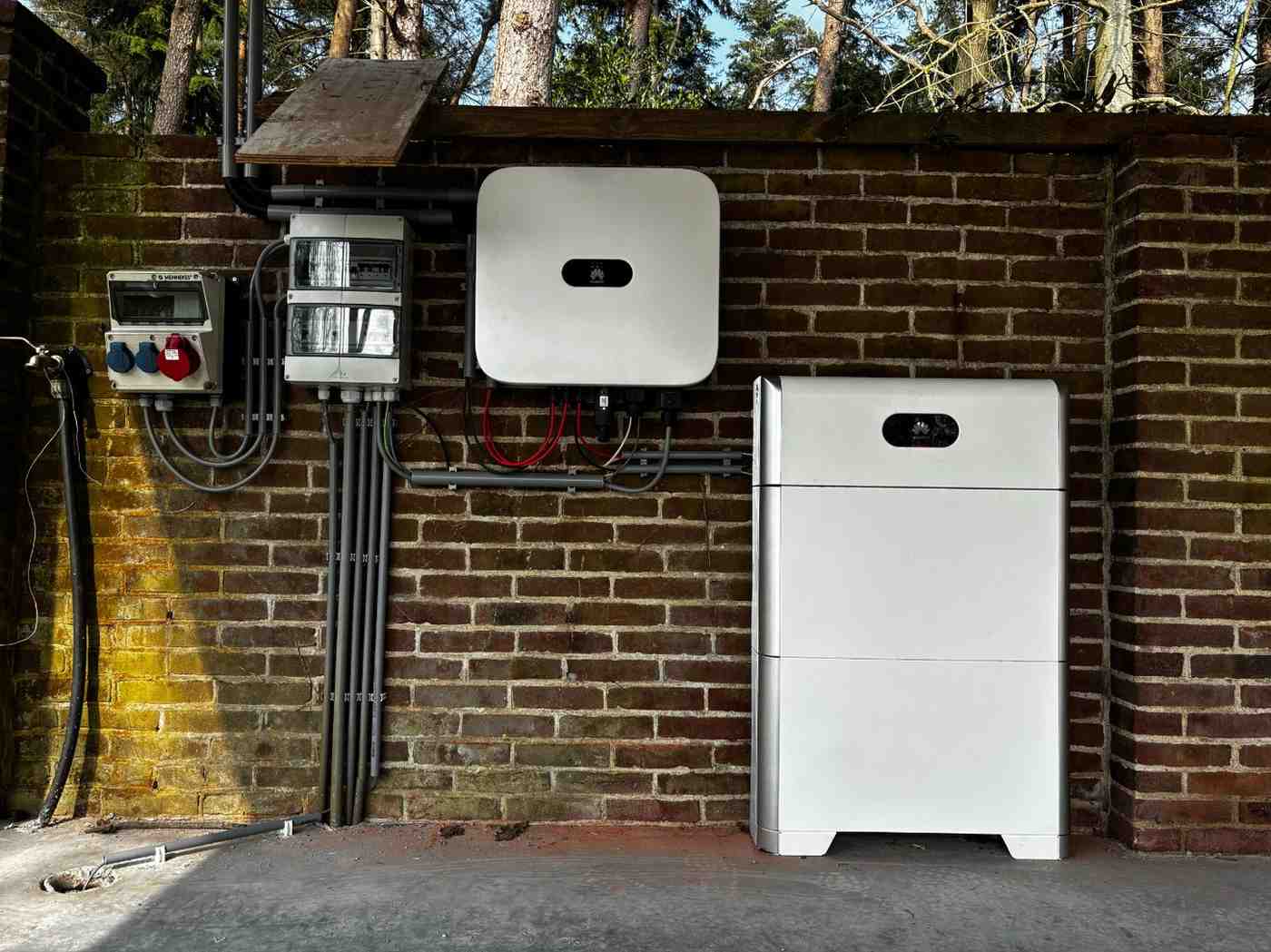
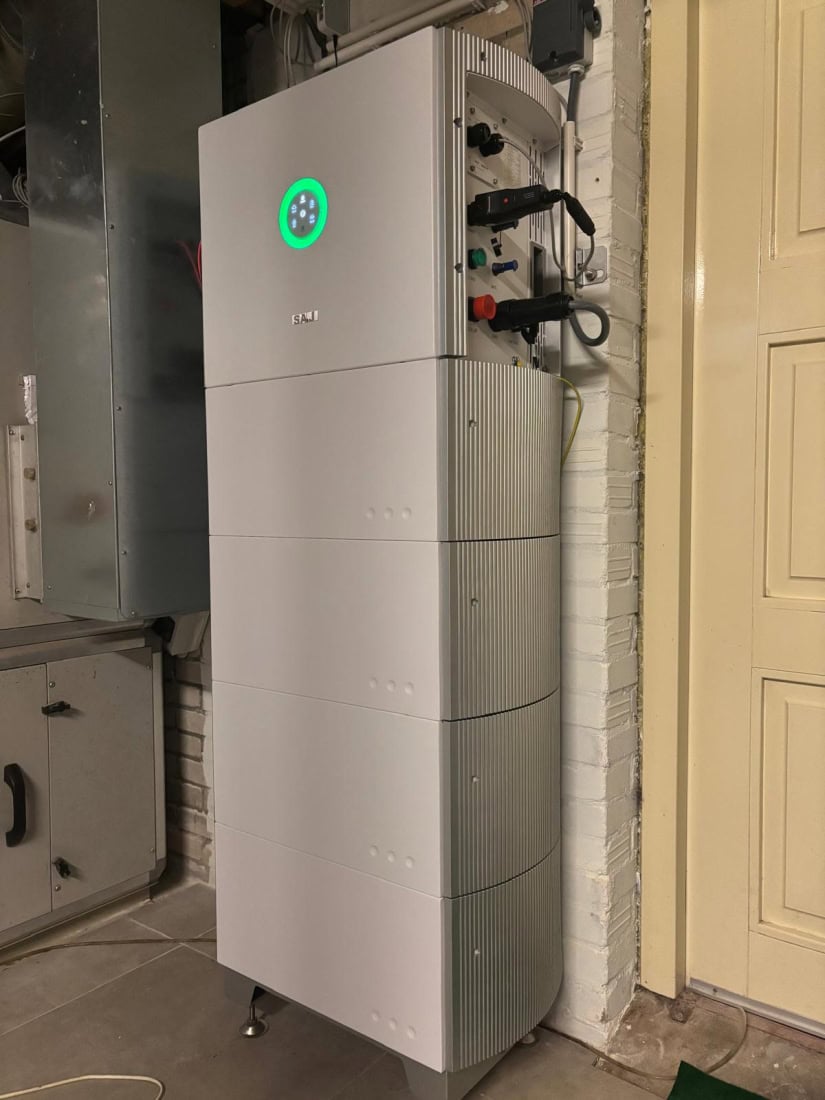
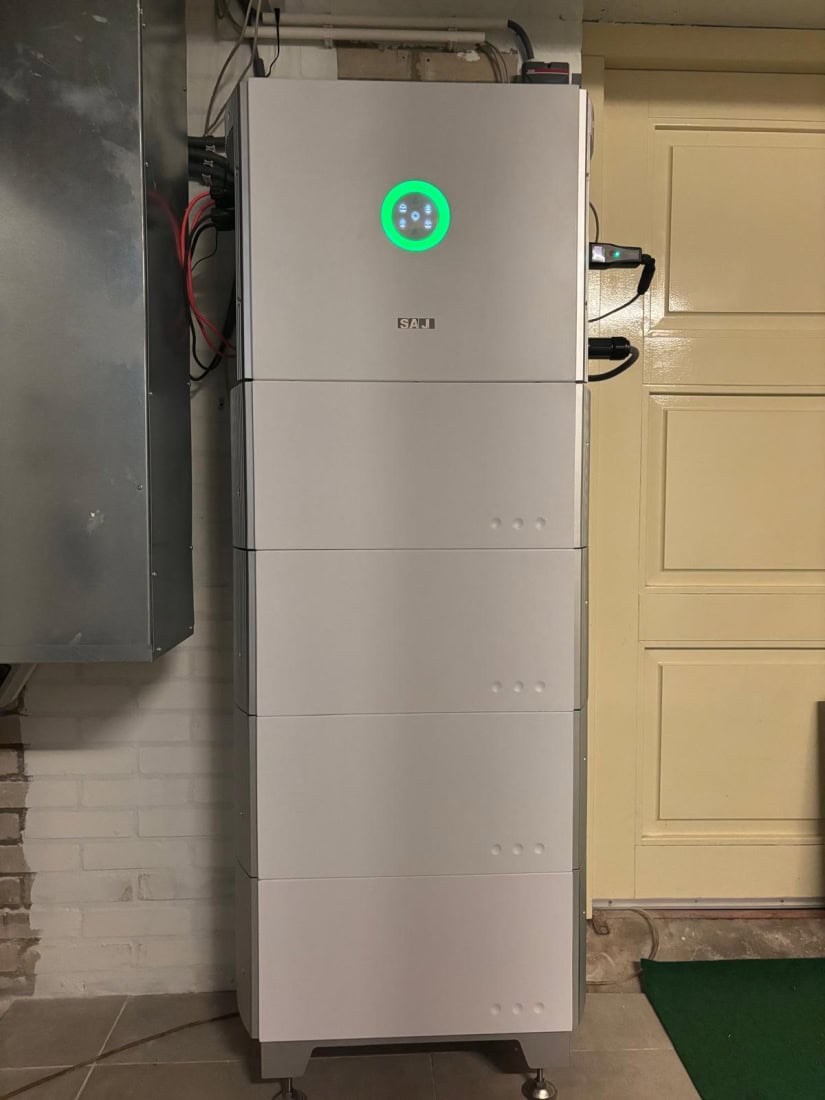
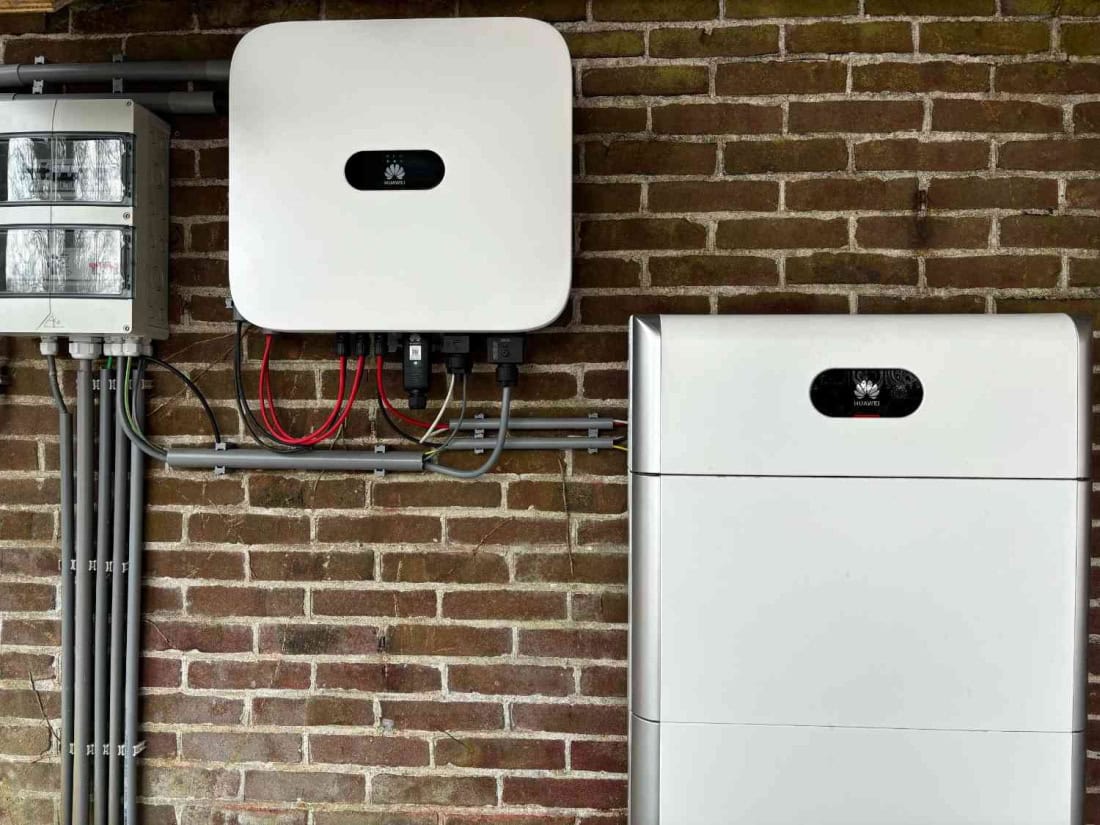
This is what a Shift to Solar home battery looks like in practice. Click through recent installations at customers' homes.
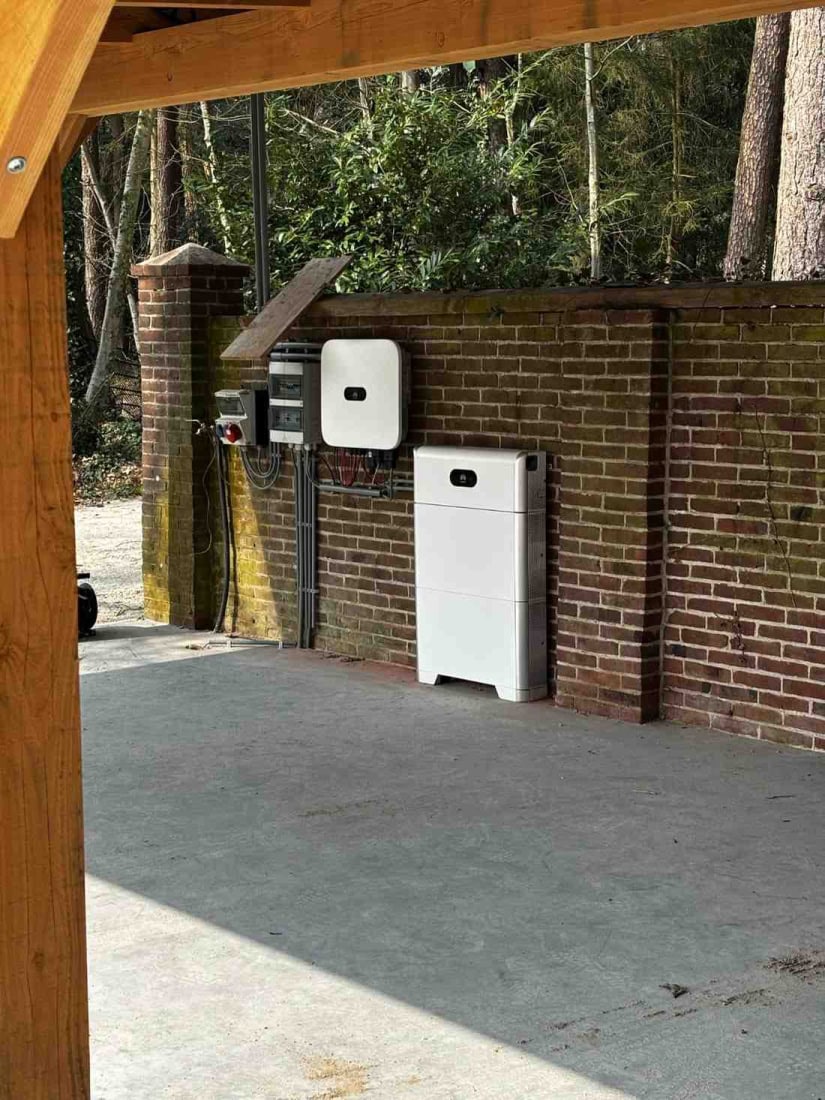
Which home battery suits your home?
Choosing a home battery is not just about the number of kWh. Also look at your consumption pattern, the times when you demand a lot of power, and your plans for the future. Are you thinking about an electric car or heat pump? That all counts.
Below are a few common situations to get your bearings. Maybe you recognise yourself in one of the examples, or maybe you have a completely different consumption.
-
Small household
Solar panels: 6-8 panels
Annual consumption: + 3,000 kWh
Indicative battery: 3-5 kWh -
Average family
Solar panels: 8-12 panels
Annual consumption: + 4,500 kWh
Indicative battery: 5-10 kWh -
Large household
Solar panels: 12-16 panels
Annual consumption: + 6,500 kWh
Indicative battery: 10-15 kWh -
With electric car or heat pump
Solar panels: 14+ panels
Annual consumption: 7,000+ kWh
Indicative battery: 10-20 kWh
Want a better picture? Then use our calculation tool or request a no-obligation quote for your situation in Stadskanaal. Then you can be sure to choose a suitable home battery.
Common mistakes when choosing a home battery
Choosing a home battery seems simple, but in practice it is easy to make the wrong choice. Below you can read where it often goes wrong.
- Choosing a battery that is structurally too big or too small, which means your storage capacity is not used efficiently
- Mainly looking at the purchase price, without considering use, efficiency and lifespan
- No allowance for future additions, such as a charging station, heat pump or additional solar panels
Are you unsure about your situation? We will be happy to check it out with you without any obligation, so you can be sure that your battery really suits your home and consumption.
Having home battery installed in Stadskanaal: this is how we work
At Shift to Solar, we guide you step by step, from the initial advice to the installation of your home battery. We take the time to explain everything, so there are never any surprises for you in Stadskanaal.
Installation by certified specialists
Our technicians are experienced in renewable energy systems. They safely connect the home battery to your meter box, ensure the correct adjustment and provide clear explanations on how to use it. So you can be sure that everything works safely and properly.
From advice to installation: all under one roof
We arrange everything around your home battery ourselves: from the initial advice to delivery. You don't have to deal with different parties. That works quickly and clearly.
- Analysis of your energy consumption and solar panels
- Technical design to suit your home and situation
- Installation and commissioning of the home battery
- Explanation, monitoring and after-care after completion
Even after installation, we remain available for questions or maintenance. So you can always be sure of well-functioning storage in your home.
Why choose Shift to Solar
We help companies and governments take truly sustainable steps. Always with energy, decisiveness and reliability.
Energetic and committed
Our energy drives sustainable innovation. We enthusiastically work on solutions that make a real impact for our customers, partners and the environment.
Reliable and transparent
We do what we promise. From quotation to delivery, you can count on clear communication and lasting results that last for years.
Moving forward together in a sustainable way
We believe in cooperation. With customers, partners and colleagues, we build a cleaner, circular future step by step.
Want to know more about who we are and what drives us?
Read more about usWhat does a home battery cost?
The cost of a home battery depends on your situation. Consider the capacity you need, the technical possibilities in your home and your future plans. So giving an exact price without more information is not possible.
That's why Shift to Solar works with a customised, no-obligation quote. You know exactly where you stand beforehand, with no surprises afterwards. We think that's only fair.
What is always included in our price?
Our price always includes more things than just the battery. You get a complete package, from advice to installation. So you can be sure that everything is taken care of neatly and safely.
- Professional installation by certified fitters
- System adjustment and testing
- Explaining how to use and operate the home battery
- Battery and installation warranty
- Service and support after delivery
Do you have questions or want to know exactly what applies to your situation? Feel free to ask, we are happy to explain.
Subsidies and schemes for home batteries
Subsidies for home batteries are sometimes available, but they change frequently and depend on your situation. We don't promise golden mountains, but are happy to help you see what is possible. That way, you know exactly where you stand.
National schemes and VAT benefits
At the national level, there are few established schemes for home batteries. Sometimes VAT refund is possible, but often only in combination with solar panels and under certain conditions. This varies from one situation to another.
At Shift to Solar, we always explain clearly which rules and benefits apply to you. That way you avoid false assumptions and know exactly where you stand.
Provincial and local opportunities
Stadskanaal is located in the province of Groningen. Not every municipality or province has active subsidies for home batteries. Opportunities also change regularly, so it pays to check carefully what is currently applicable.
Together, we look at what schemes are currently available and what is possible for your home in Stadskanaal. That way, you won't face any surprises.
Customer experiences
Many customers choose Shift to Solar because of the clear advice. We really take our time from the first contact, so you know exactly where you stand.
We take care of the entire process - from analysis to installation and after-care - in-house. Customers appreciate our tidy working methods and fast communication, even after installation.
Wondering how others experience our service? Take a look at our experiences page for more customer stories.
What about the power grid in Stadskanaal?
The power grid in Stadskanaal falls under Enexis. The province of Groningen has been under pressure for some time. Due to the earthquake problem, many houses have been reinforced and insulated, and solar panels were often added. Logical, but it also means that more power is fed into the grid than the grid could originally handle. In the outlying area around Stadskanaal, grid capacity is particularly tight. Enexis is investing in expansion, but that will take years. A home battery is therefore a practical choice in Stadskanaal: you store your generated power and are not dependent on a grid that cannot keep up with the growth.
Personalised advice on a home battery in Stadskanaal
Want to know what the phasing out of the energy-saving scheme means for your home in Stadskanaal? Or are you curious if a home battery is the logical next step for you?
Ask for no-obligation advice. We will be happy to think along with you and find the best solution together.




 Dutch
Dutch
 English